Posture and sustained positions
- Desk work, laptop use, phone use)
- Prolonged driving
- Limited movement breaks
- Prolonged driving
- Limited movement breaks
Neck pain is very common and can range from mild stiffness to more persistent discomfort that affects work, sleep, and daily activities. It is often linked to posture, prolonged screen use, stress, or sudden strain, and may sometimes overlap with headaches or shoulder pain. For many people, neck pain improves with the right combination of movement, self-care, and a tailored treatment plan. If your symptoms are lingering, recurring, or worrying, an assessment can help clarify what is contributing and what will support recovery.
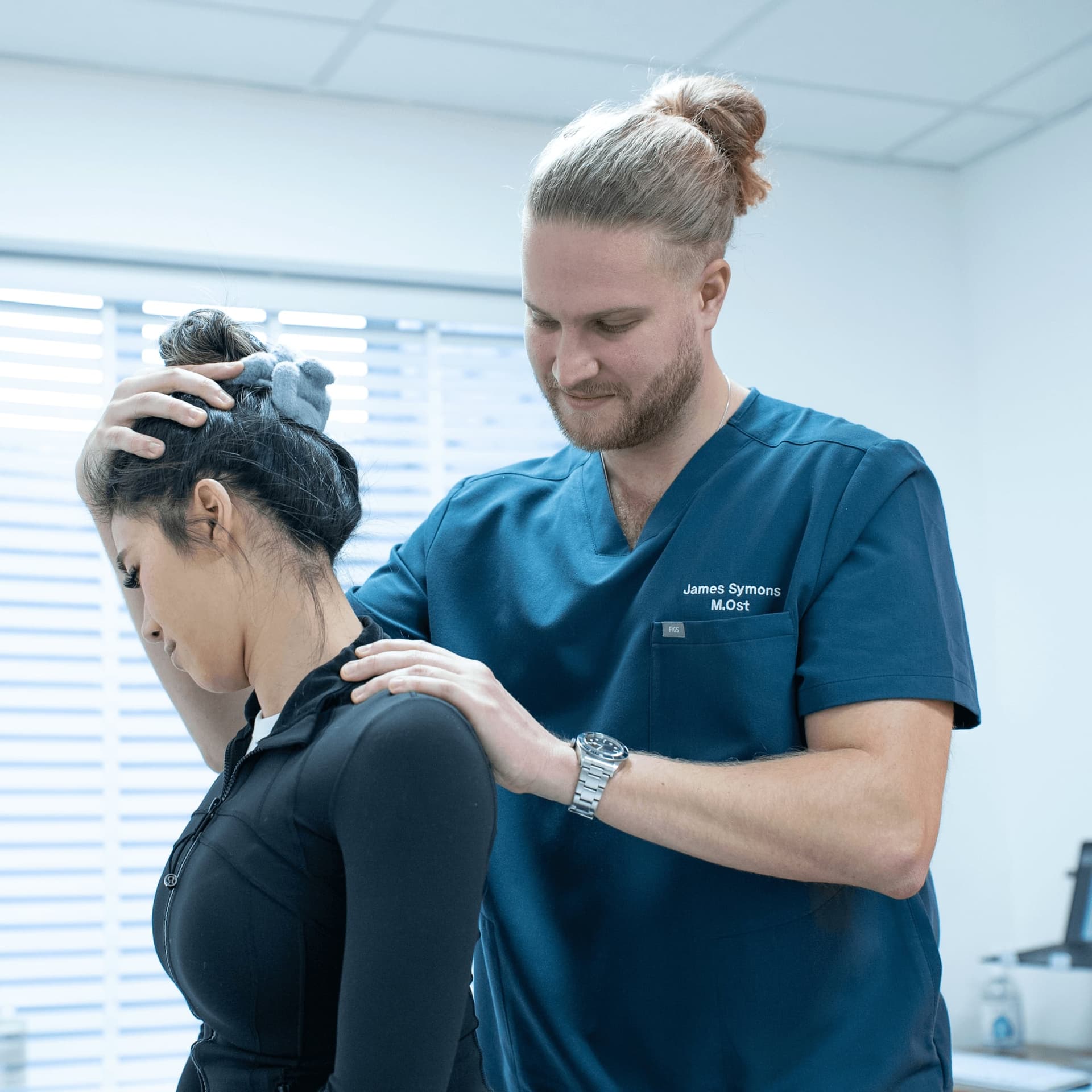

Neck pain refers to discomfort arising from the muscles, joints, and supporting tissues of the cervical spine, and sometimes from irritation of nearby nerves. It may come on suddenly after an awkward movement or develop gradually from sustained positions, repeated strain, or tension.
Neck pain is often described as either acute or persistent. Acute neck pain is usually short-term and may settle within days or weeks. Persistent or recurring neck pain tends to benefit from a clearer plan that addresses contributing factors such as movement habits, posture, stress, and conditioning, not just the pain itself.
Neck pain can present in different ways. Common symptoms include:
Symptoms vary between individuals. An assessment can help clarify likely drivers and appropriate next steps.
Stiff neck (often short-term)
A stiff neck often develops after sleeping awkwardly, prolonged screen use, stress, or a sudden change in activity. It may feel tight, sore, and restricted, particularly when turning the head. In many cases, it settles with gentle movement, pacing, and time.
Persistent or recurring neck pain
Neck pain that keeps returning or does not improve may be influenced by posture habits, repeated strain, stress, or reduced strength and mobility. In these cases, a tailored approach can help address why symptoms are recurring rather than only easing short-term discomfort.
How neck tension can relate to headaches
Tension and restricted movement in the neck can sometimes contribute to headaches, particularly those that start at the base of the skull or worsen with neck movement. This does not mean there is a serious underlying condition, but addressing neck mechanics and posture can be helpful.
Pain at the base of the skull
Pain at the base of the skull is a common concern and is often linked to muscle tension, posture, or sustained positions. If this pain is new, severe, worsening, or accompanied by other concerning symptoms, medical advice should be sought.
The term “trapped” or “pinched” nerve is commonly used to describe symptoms such as pain, tingling, or weakness that may travel from the neck into the arm. It is a descriptive term rather than a diagnosis, and symptoms can arise for several reasons.
Common signs people report
What can help
Pain at the base of the skull is a common concern and is often linked to muscle tension, posture, or sustained positions. If this pain is new, severe, worsening, or accompanied by other concerning symptoms, medical advice should be sought.
When to seek urgent medical advice
If symptoms are worsening, severe, or accompanied by significant weakness, loss of coordination, or other red flags, urgent medical advice is important.
Neck pain rarely has a single cause. Common contributing factors include:
Most neck pain is not serious, but red flags should be taken seriously.
Book an assessment soon if
Most neck pain improves, but knowing when to seek help matters.
Many people benefit from simple, practical steps:
If you use pain relief medication, a pharmacist or GP can advise what is appropriate. Persistent or recurring neck pain often benefits from assessment and a tailored plan.
These general exercises are suitable for many people. Stop if symptoms worsen or you develop new numbness, weakness, or dizziness.






Treatment works best when tailored to the individual. Options may include:
The right approach depends on your symptoms, goals, and how long the pain has been present.
Our approach starts with understanding your pain, your routine, and what you want to return to.
Treatment is tailored and reviewed as you progress.
If neck pain is limiting your comfort, work, or sleep, you do not have to manage it alone. A clear assessment and plan can reduce uncertainty and help you move with more confidence.
Many people find short-term relief by moving little and often, changing position regularly, and avoiding long periods in one posture. Heat or ice can help some people. If symptoms are worsening or not settling, it is sensible to get it checked.
There is not usually a single quick fix. Neck pain often improves with a mix of gentle movement, pacing daily activities, and reducing the specific positions or loads that irritate it. If pain persists beyond a few weeks or keeps returning, assessment can help clarify the best next steps.
Neck pain can be linked to muscles, joints, discs, and other surrounding tissues, as well as how you are moving and loading the area day to day. Common contributors include prolonged desk or phone posture, stress and tension, unaccustomed activity, or an awkward movement.
Sudden neck pain can happen after sleeping in an awkward position, a sudden movement, increased stress, or a change in routine or activity. Sudden pain does not automatically mean something serious, but it is worth monitoring, especially if symptoms are severe or changing.
Seek urgent medical help if neck pain follows significant trauma (such as a fall or collision), or if it comes with symptoms like fever, worsening weakness, trouble walking or balance, or severe headache with feeling unwell. If you are unsure, it is safer to get medical advice.
Red flags include: severe pain after an accident, a hot or feverish illness with severe neck pain, worsening weakness or numbness in an arm or hand, new problems with balance or walking, or pain that is persistently getting worse rather than better.
It is sensible to seek advice if neck pain has not improved after a few weeks, if pain relief has not helped, if you are worried, or if you have symptoms such as pins and needles, numbness, or pain spreading into the arm.
Muscular neck pain often feels like tightness, soreness, or stiffness and can change with movement or posture. That said, symptoms can overlap, so if pain is persistent, severe, or associated with arm symptoms, assessment is the safest way to clarify likely drivers.
Yes, some headaches are associated with neck tension or irritation in the upper neck. If headaches are severe, sudden, or different from your normal pattern, seek medical advice.
There is no single best treatment for everyone. The best approach depends on your symptoms, how long they have been present, and what aggravates them. Many plans include advice on movement and pacing, targeted rehabilitation, and hands-on treatment where appropriate.
Many cases improve over days to a few weeks. If symptoms are not improving after a few weeks, keep recurring, or are affecting daily life, it is worth getting assessed.
If symptoms include pins and needles, numbness, or pain that travels into the arm, recovery time varies. It is important to get assessed if these symptoms are present, worsening, or affecting strength or function, so the right next steps can be advised.
From the blog

Neck pain is a common issue that many people experience at some point in their lives.
Read article
Neck pain is a common complaint that can arise from various causes, including poor posture, muscle strain, or underlying medical conditions.
Read article
Neck pain and jaw pain are two common complaints that many people experience at different times. However, what may come as a surprise is that these two types of pain can often be interconnected.
Read article