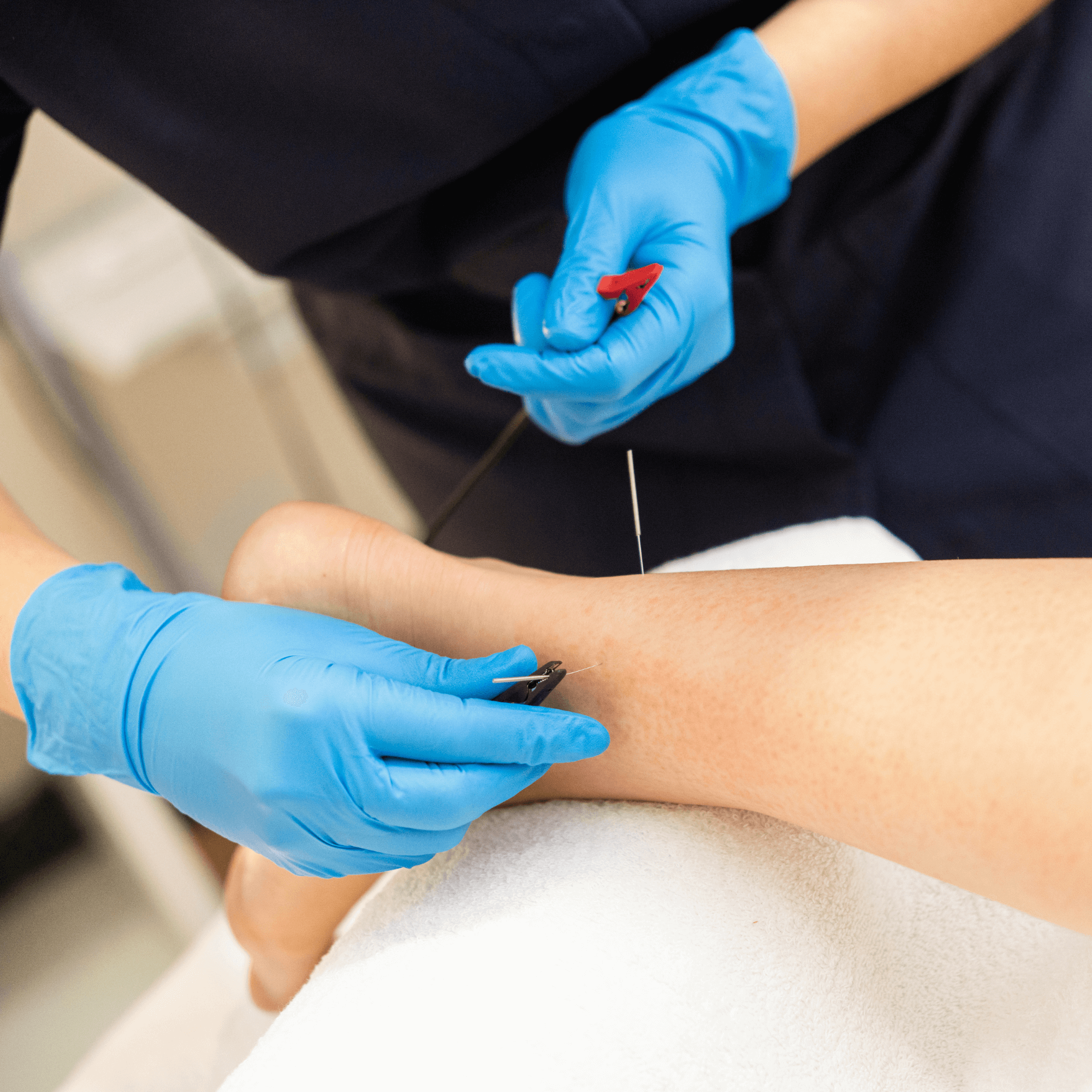
Dry needling is a targeted technique used to help relieve muscle tension and reduce sensitivity in trigger points. It involves using very fine needles to stimulate specific muscles and connective tissue, often as part of a wider plan to improve movement, comfort, and recovery.
At Bodyfunction, dry needling is delivered as part of a medical acupuncture approach in a clinical setting. It is not traditional Chinese acupuncture and is typically used alongside hands-on treatment, rehabilitation, and self-management advice.
Appointments are available at both of our London clinics.
Dry needling (medical acupuncture) is available at both Bodyfunction clinics. Choose the location that suits you.
Dry needling (medical acupuncture) is available at both Bodyfunction clinics. Choose the location that suits you.
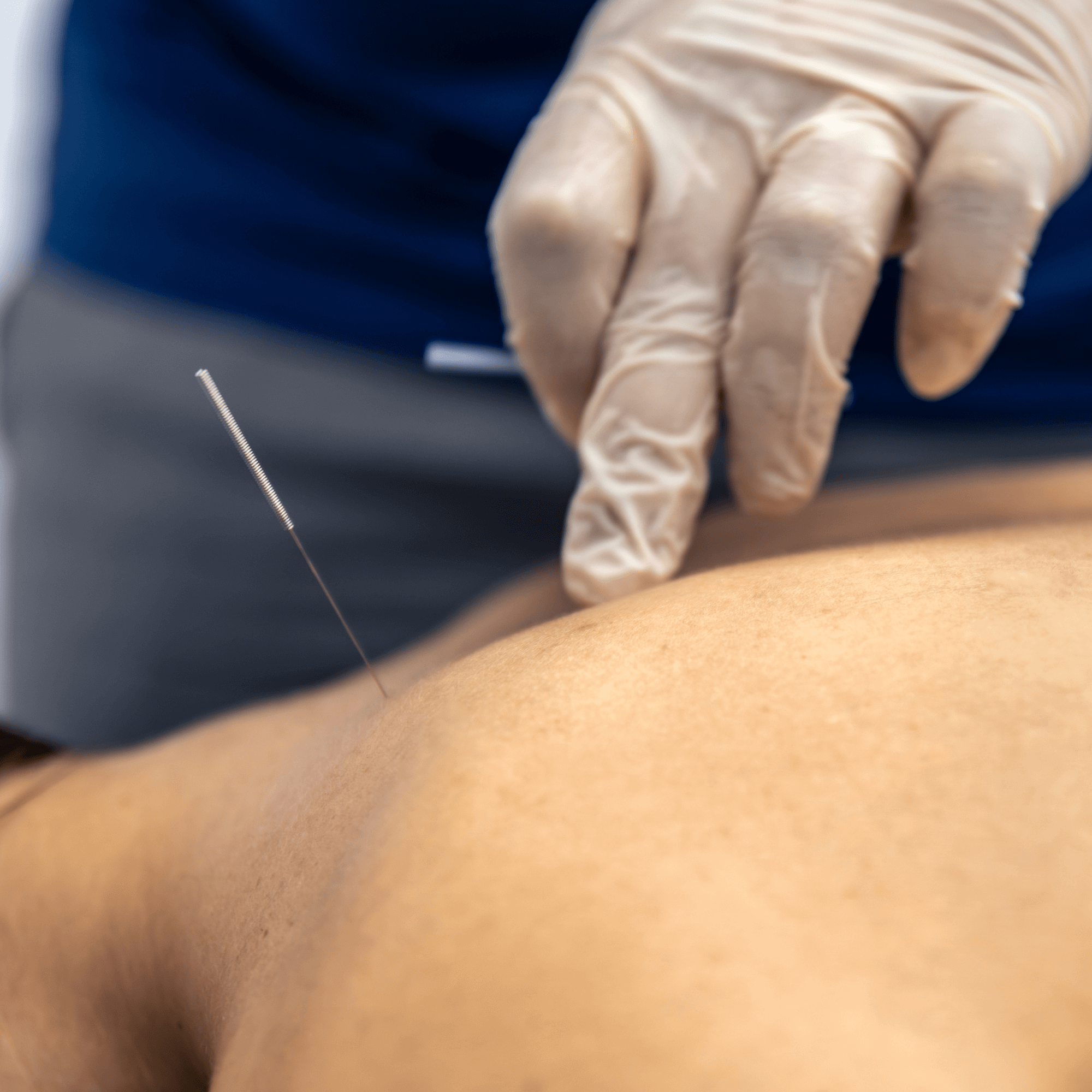
Dry needling uses fine, sterile, single-use needles to stimulate specific areas of muscle and surrounding tissue. The aim is usually to reduce local sensitivity, improve how a muscle behaves, and support more comfortable movement.
It is commonly used when a muscle feels persistently tight, reactive, or overloaded, or when trigger points are contributing to pain or restricted movement. For some people, it can help “reset” an area enough to make rehabilitation exercises and movement work more effective.
Dry needling is typically one tool within a broader treatment plan rather than a stand-alone solution.
The words “acupuncture” and “needling” are often used interchangeably online, but they can refer to different approaches.
Dry needling is generally used in musculoskeletal care to target muscles and trigger points. It is often chosen for pain linked to muscle tension, overload, or sensitivity and is commonly paired with manual therapy and rehabilitation.
Traditional acupuncture is usually based on a different model of assessment and treatment. People may seek it for a wide range of concerns, including general wellbeing.
At Bodyfunction, dry needling is offered within a clinical, movement-focused framework, aimed at musculoskeletal problems and recovery.
Dry needling may be helpful when symptoms are influenced by muscle tightness, trigger points, or local tissue sensitivity.
Our approach starts with understanding your pain, your routine, and what you want to return to.
Treatment is tailored and reviewed as you progress.
Your clinician will ask about your symptoms, medical history, and what you would like help with. They will explain the technique, answer questions, and confirm consent before proceeding.
You may feel:
- A small prick as the needle goes in
- A dull ache, heaviness, or warmth in the muscle
- A brief twitch response in the muscle
The sensation varies from person to person and from area to area. Treatment should be tolerable, and your clinician can adjust the approach at any time.
It is common to experience:
- Mild soreness for 24–48 hours
- A feeling of tiredness in the treated area
- Occasional bruising
Most people can return to normal daily activity immediately. Training advice depends on what was treated and your goals. You can ask for guidance during your appointment.
Dry needling is generally safe when delivered by trained clinicians using sterile, single-use needles. As with any intervention, there are circumstances where it may not be appropriate.
If dry needling is not suitable, we can recommend other approaches that fit your symptoms and goals.
Dry needling can help with muscle-related symptoms, but it is not always the most appropriate first step.
We are happy to guide you to the most appropriate appointment type.
Appointment lengths and fees vary depending on the type of session booked.
For many people, the best approach is gentle movement, pacing, and avoiding prolonged sitting or bed rest. Heat can help stiffness and walking is often a good starting point. If pain persists or keeps returning, an assessment can clarify what will help most.
Mild soreness for 24–48 hours is common, particularly in sensitive areas or after trigger point work.
Not exactly. Dry needling (medical acupuncture) is typically used in musculoskeletal care to target muscles and trigger points.
Temporary soreness, mild bruising, or fatigue can occur. More significant reactions are uncommon, but your clinician will discuss any relevant risks before treatment.
Often yes, but it depends on the area treated and your plan. Your clinician can advise whether to train the same day or adjust load briefly.
That is common. Tell us and we can discuss alternatives, or keep treatment non-needling if preferred.
If you are looking for dry needling in London and want a clinician-led approach that fits into a wider recovery plan, we are here to help.
Choose your clinic and book online at a time that suits you.