
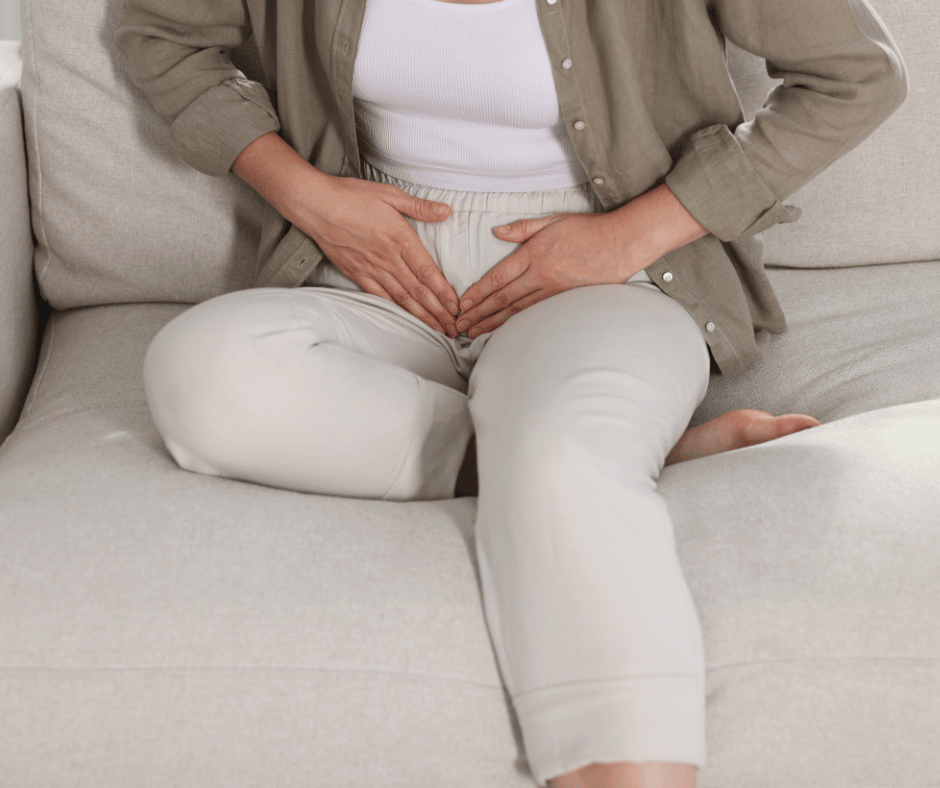
Bladder Leakage and Menopause: Why It Happens and What You Can Do About It
Bladder symptoms are among the most common and least talked-about changes that come with perimenopause and menopause. Leaking on a cough, rushing to the toilet, waking at night: these are not unusual, but most women are never warned to expect them.
These changes can feel confusing, frustrating and, for some women, quite embarrassing. The important thing to know is that bladder leakage during menopause is common and is not something you simply have to put up with. Hormonal changes during this stage of life can affect the pelvic floor, the bladder and the tissues that support them. In many cases, symptoms can be improved significantly with the right support.
Why menopause affects the pelvic floor and bladder
Menopause can affect bladder control for a few different reasons. One of the main factors is the drop in oestrogen. Oestrogen helps maintain the health and quality of tissues around the bladder, urethra and vagina. As levels decline, these tissues can become thinner, drier and less resilient, which can contribute to urinary symptoms. This broader group of symptoms is often referred to as genitourinary syndrome of menopause.
At the same time, the pelvic floor muscles may lose strength and tone with age, hormonal change, and the cumulative effects of pregnancy, childbirth, chronic pressure or previous strain. When the pelvic floor is not supporting the bladder and urethra effectively, women may notice leaking when coughing, laughing, sneezing or exercising. Others feel a sudden urge to pass urine and struggle to hold on. In practice, many women experience a mixture of both.
This is why menopause incontinence can feel as though it appears out of nowhere. In many cases there has been a gradual reduction in support and tissue resilience over time, and menopause is the point at which symptoms become noticeable.
What symptoms should you pay attention to?
Bladder changes in menopause can show up in different ways. Symptoms worth paying attention to include:
- leaking urine when coughing, sneezing, laughing or exercising
- a sudden urge to urinate that is difficult to defer
- going to the toilet more often than usual
- waking in the night to pass urine
- feeling that your pelvic floor is weaker than it used to be
- avoiding exercise or certain activities because of concern about leakage
These symptoms are common, but they should still be taken seriously. If they are affecting your daily life, confidence, sleep, exercise or social activity, it is worth seeking advice rather than simply adapting around them.
If symptoms are accompanied by pain, burning, visible blood in the urine, recurrent urinary tract infection symptoms, or anything that feels unusual or severe, speak to your GP. Not all urinary symptoms in menopause are simply down to pelvic floor weakness, and it is worth ruling other causes out.
What are the treatment options?
There is no single urinary incontinence treatment that suits everyone. The right approach depends on your symptoms, your history and what is contributing to the problem.
Pelvic floor support and guided rehabilitation
Pelvic floor exercises are often the first step and they can help. NICE supports supervised pelvic floor muscle training for urinary incontinence, and a period of around three months is commonly used to assess whether symptoms are improving. The challenge is that many women are unsure whether they are doing the exercises correctly, and some need more than a generic instruction to squeeze and hold.
A more tailored assessment can help identify whether the issue is straightforward pelvic floor weakness or whether wider factors are involved — breathing mechanics, abdominal pressure management, posture, movement habits, or reduced pelvic support that has developed over time. This is where hands-on clinical support can be valuable. At Bodyfunction, the aim is not simply to tell someone to do Kegels and send them away, but to understand what is actually contributing to the problem. osteopathic assessment at our Islington clinic
EMSELLA
For women who want a non-invasive option that goes beyond home exercise, EMSELLA may be considered as part of the treatment pathway. EMSELLA pelvic floor strengthening in Marylebone
EMSELLA uses high-intensity focused electromagnetic technology to stimulate deep pelvic floor contractions at a therapeutic level. It is often of interest to women whose symptoms have not improved sufficiently with exercises alone, or who want additional support without surgery or internal treatment. It can complement exercise-based approaches or, depending on the individual, serve as an alternative starting point.
Suitability should be assessed properly before starting. EMSELLA is not the right answer for everyone, but for the right patient it can be a helpful option within a broader clinical plan.
HRT and menopause-related bladder symptoms
Hormone replacement therapy can play an important role in managing menopausal symptoms, including genitourinary symptoms of menopause where oestrogen deficiency is contributing to bladder and tissue changes. That is a conversation to have with your GP or menopause specialist.
HRT does not directly address the physical and functional side of pelvic floor weakness where that is present. This is where targeted pelvic floor support and treatments such as EMSELLA may still have an important role. Menopause bladder symptoms can have both a hormonal component and a structural or functional one, and ideally both are considered.
Lifestyle factors
Depending on the individual, useful adjustments may include reducing caffeine, stopping smoking, managing constipation, reviewing fluid habits and addressing excess pressure on the pelvic floor through weight management where appropriate. These are rarely the full answer on their own, but they can reduce aggravating factors and support other treatment approaches.
Pelvic floor treatment for menopause in London
If you are looking for help with menopause pelvic floor symptoms in London, an assessment-led approach tends to produce better outcomes than defaulting to a single treatment.
At Bodyfunction’s Marylebone clinic, the starting point is understanding the pattern of your symptoms and what may be driving them — when the leakage happens, whether urgency is involved, how menopause fits into the picture, and whether EMSELLA is likely to be appropriate. EMSELLA treatment in Marylebone
For some women, EMSELLA may be a strong option. For others, the better starting point is a broader pelvic floor and osteopathic assessment, particularly where symptoms sit alongside posture, breathing, movement or postpartum recovery factors. The goal is not to put everyone into the same treatment, but to identify what is most likely to help.
Is it too late to do something about it?
No. This is a very common concern, particularly among women who have had symptoms for years or who assume that menopause-related bladder changes are permanent.
In reality, pelvic floor function can still respond to training, support and appropriate treatment at any stage of life. NICE guidance on non-surgical management confirms that pelvic floor muscle training remains a central option for urinary incontinence, and menopause-related bladder symptoms are not something women are expected simply to accept.
The earlier symptoms are addressed the better, but improvement remains very possible even where the problem has been present for some time. The key is choosing the right treatment pathway rather than assuming pads are the only realistic option.
Take the next step
If bladder leakage has started around perimenopause or menopause, it is worth getting it properly assessed. These symptoms are common, but they are not trivial, and they are not something you have to work around quietly.
At Bodyfunction, suitability for EMSELLA is assessed individually and discussed as part of a wider clinical picture. For some women it may be the right next step. For others, a different form of pelvic floor support may be more appropriate.
Book a consultation at Bodyfunction’s Islington clinic
Frequently asked questions
Can menopause cause bladder leakage? Yes. Falling oestrogen levels during menopause can affect the tissues supporting the bladder and urethra, while age and hormonal change can also reduce pelvic floor strength. Both factors can contribute to leakage.
Can perimenopause cause bladder leakage? Yes. Oestrogen begins to fluctuate and decline during perimenopause, which can start affecting bladder and pelvic floor function before periods stop entirely. Some women first notice urgency or leakage during this transitional stage rather than after menopause itself.
Is pelvic floor weakness common during menopause? Yes. Many women notice reduced pelvic floor support during perimenopause and after menopause, particularly where there are additional factors such as childbirth history, ageing, chronic coughing or constipation.
What is the best treatment for menopause incontinence? The best treatment depends on the cause of your symptoms. Options may include pelvic floor exercises, guided pelvic floor support, lifestyle changes, HRT discussion with your GP, and non-invasive treatment such as EMSELLA. A proper assessment is the most reliable way to identify what is appropriate for your situation.
Can EMSELLA help with menopause-related bladder leakage? EMSELLA may help some women with menopause-related bladder leakage by stimulating pelvic floor contractions at a therapeutic level. Suitability is assessed individually as part of a consultation.
How long should I try pelvic floor exercises before seeking help? If you have been doing them consistently for around three months without clear improvement, it is sensible to seek professional advice. An assessment can identify whether technique needs correcting and whether additional clinical support would help.
Is it too late to treat urinary incontinence after menopause? No. Many women improve symptoms with the right treatment approach, even if they have been present for a long time. Pelvic floor function can still respond to training and support at any stage of life.