
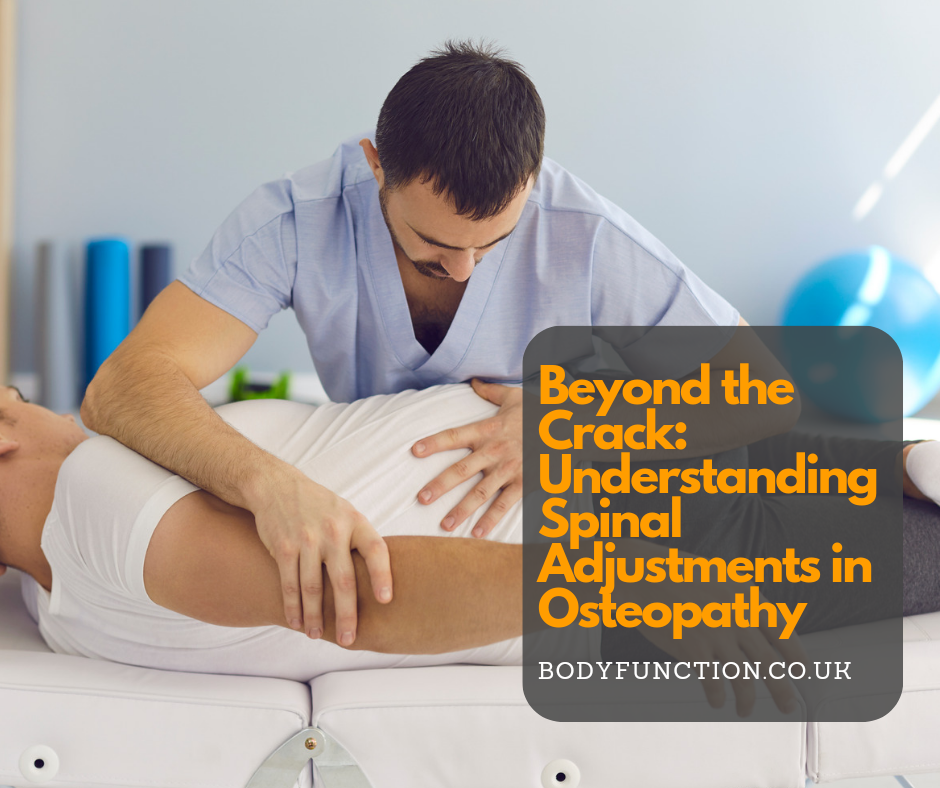
Beyond the Crack: Understanding Spinal Adjustments in Osteopathy
Introduction:
The image of a back “cracking” is often associated with various manual therapies, including osteopathy. However, there’s more to it than just the sound. In this short blog post, we’ll delve into the world of spinal adjustments in osteopathy, dispelling myths and shedding light on the purpose and benefits of this commonly misunderstood aspect of osteopathic care.
Dispelling the Myths:
-
It’s Not Just About the Sound: The audible “crack” or “pop” that sometimes occurs during a spinal adjustment is not the primary focus of the osteopathic treatment. Instead, it is a byproduct of the release of gas bubbles in the synovial fluid when joint pressure changes. The real goal is to restore optimal function and mobility to the affected area.
-
Precision and Expertise: Osteopathic spinal adjustments are precise, controlled movements applied to specific joints by a trained practitioner. This targeted approach ensures that the adjustment addresses the root cause of the issue, promoting improved movement and reducing pain.
-
A Holistic View: Osteopathy takes a holistic approach to healthcare, considering the body as an interconnected system. Spinal adjustments are just one aspect of a comprehensive treatment plan that may include soft tissue manipulation, exercise prescription, and lifestyle advice.
The Purpose of Spinal Adjustments in Osteopathy:
-
Restoring Mobility: The spine plays a crucial role in overall mobility and function. Osteopathic spinal adjustments aim to restore normal range of motion to spinal joints, addressing stiffness and promoting flexibility.
-
Alleviating Pressure: Over time, daily activities, poor posture, and injuries can lead to imbalances and restrictions in the spine. Spinal adjustments help alleviate pressure on nerves and surrounding tissues, reducing pain and promoting a sense of well-being.
-
Enhancing Nervous System Function: The spine houses the spinal cord, a vital component of the nervous system. By optimising spinal function, osteopathic adjustments contribute to improved communication between the brain and the rest of the body, supporting overall health.
-
Individualised Care: Osteopathic practitioners tailor their approach to each individual, considering the patient’s health history, current condition, and treatment goals. Spinal adjustments are only applied when deemed appropriate for the specific needs of the patient.
Conclusion:
In the world of osteopathy, spinal adjustments are a valuable tool in the hands of skilled practitioners. Far from being a mere “back cracking” session, these adjustments are part of a holistic and individualised approach to care. If you’re considering osteopathic treatment, don’t let the sound of a spinal adjustment overshadow the potential benefits it can offer in terms of improved mobility, pain relief, and overall well-being. Consult with a qualified osteopath to learn more about how this gentle and precise technique may be incorporated into your personalised treatment plan.