
Knee pain is common and can affect the front of the knee (around the kneecap), the inner or outer side, or the area behind the knee. It may come on after a specific activity or build up gradually, and can make walking, stairs, bending, sport, or sleep uncomfortable.
While knee pain can feel worrying, it is often manageable with the right approach. Assessment helps clarify what may be driving the symptoms and guides a plan tailored to you.
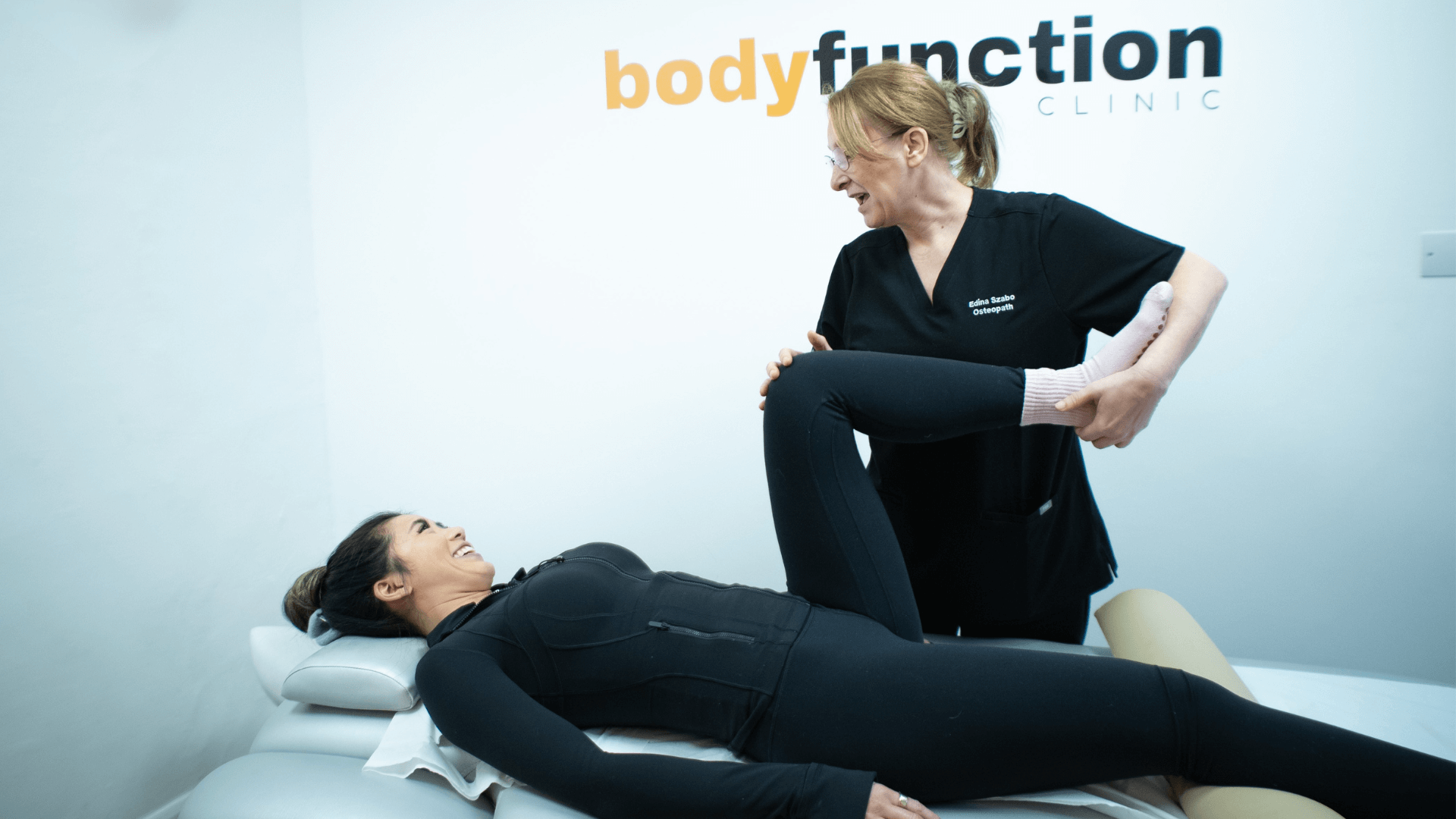
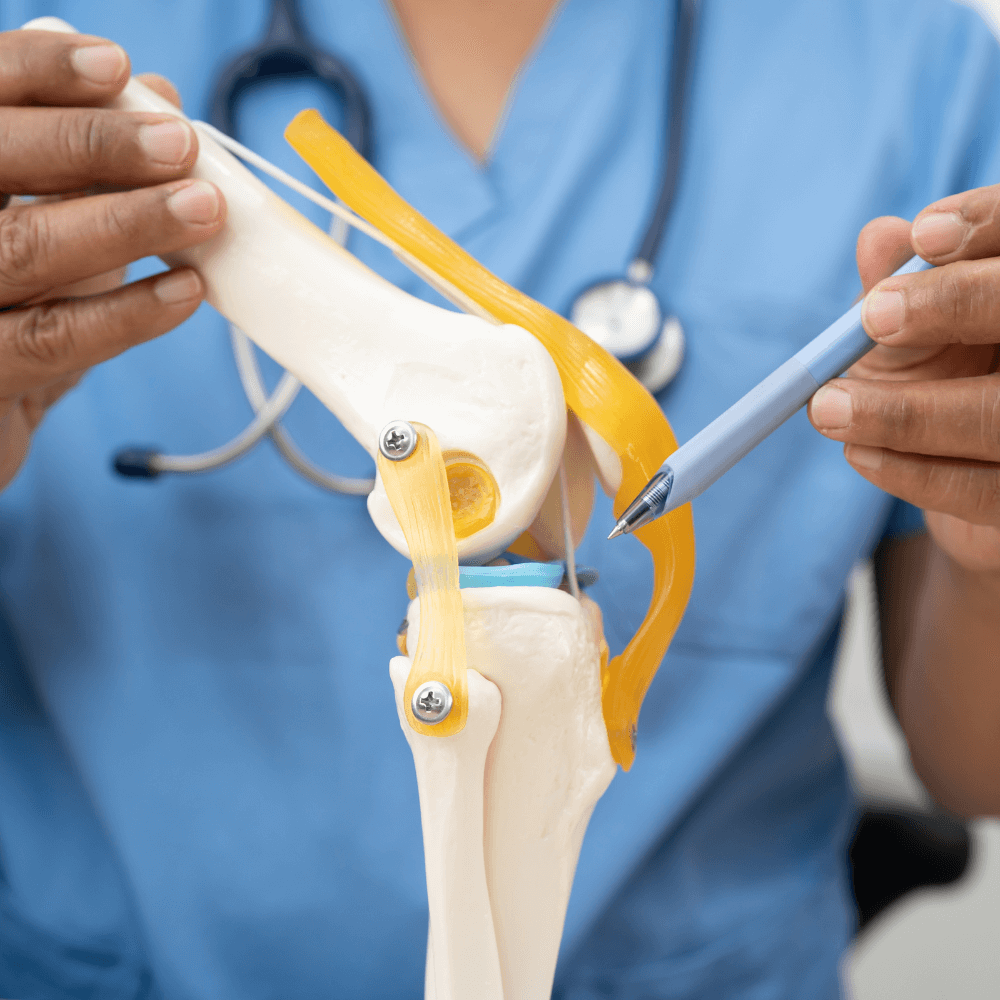
Knee pain refers to discomfort arising from the knee joint or the tissues around it, such as ligaments, tendons, bursae, cartilage, and the muscles that support how the knee moves and takes load. Pain can also be influenced by how the hip, ankle, and lower back are working, because the knee sits in the middle of the movement chain.
Knee pain may be described as acute when it starts suddenly, often after a strain or a change in activity. It is considered persistent when symptoms last longer than expected, keep returning, or gradually worsen over time.
Symptoms vary from person to person, which is why assessment is helpful to understand likely contributing factors.
ront of knee pain (kneecap area)
Front-of-knee pain is often noticed on stairs, squats, getting up from a chair, or after sitting for a while. It can be influenced by load, strength, and movement patterns rather than one single cause. Location alone doesn’t confirm what is driving symptoms.
Inner knee pain (medial side)
Inner knee pain may be felt on walking, twisting, changing direction, or after longer periods on your feet. It can also feel tender on the inside of the knee. Assessment helps clarify whether the driver is joint irritation, soft tissue overload, or movement strategy.
Outer knee pain (lateral side)
Outer knee pain is often linked to repetitive load (for example running) or activities that increase side-load, such as hills, stairs, and single-leg work. It may feel sharp, tight, or sore on the outside of the knee.
Pain behind the knee
Pain behind the knee can feel like tightness, pressure, or aching, and may be more noticeable when straightening the knee, walking, or after activity. Because behind-knee pain can have different causes, it is important to consider red flags and changes in swelling or calf symptoms.
Swollen knee
Swelling can occur after a change in activity, irritation, or injury, and may make the knee feel stiff, heavy, or limited. Sudden swelling after a fall or twist, or a hot red swollen joint with fever, should be checked urgently.
Knee pain after running
Knee pain after running is common and often relates to load tolerance, training spikes, footwear, hills, or strength and control at the hips and calves. A return-to-running plan usually needs pacing and progressive strengthening rather than pushing through pain.
Back pain rarely has a single cause. It is more often a combination of triggers and contributing factors.
- Stairs, squats, kneeling, lifting)
- Repetitive bending and straightening
- Longer walks than usual or hill work
- Sudden increase in running or sport
- Returning after time off
- Increase in intensity, speed, or volume
- Reduced hip and glute control
- Quad or calf weakness
- Poor single-leg control under load
- Stiff ankle or hip affecting knee loading
- Altered gait or movement strategy
- Reduced joint mobility
Pregnancy and postnatal changes can also influence how the back and pelvis cope with load and movement.
If this is relevant for you, it is worth mentioning during an assessment so the plan fits your current needs.
Seek urgent medical help if you have
Book an assessment soon if
Most knee pain is not serious, but recognising red flags is important.
When To seek Help about knee pain
Most back pain is not serious, but it is important to recognise red flags.
Seek urgent medical help if you have
Book an assessment soon if
If you are ever uncertain, it is sensible to speak to a healthcare professional for advice.
Keep moving gently rather than complete rest
Reduce aggravating activities temporarily (stairs, deep squats, long runs)
Use heat or ice depending on what feels most comfortable
Break up long periods of sitting
Consider supportive footwear for longer walks
Short, frequent movement tends to be better than long rest
Medication advice should be discussed with a pharmacist or GP. Ongoing or recurrent symptoms often benefit from assessment and a plan.
These are general options that many people find helpful. Choose gentle movement that feels manageable.
Stop if pain worsens significantly or you develop new numbness, tingling, or weakness.
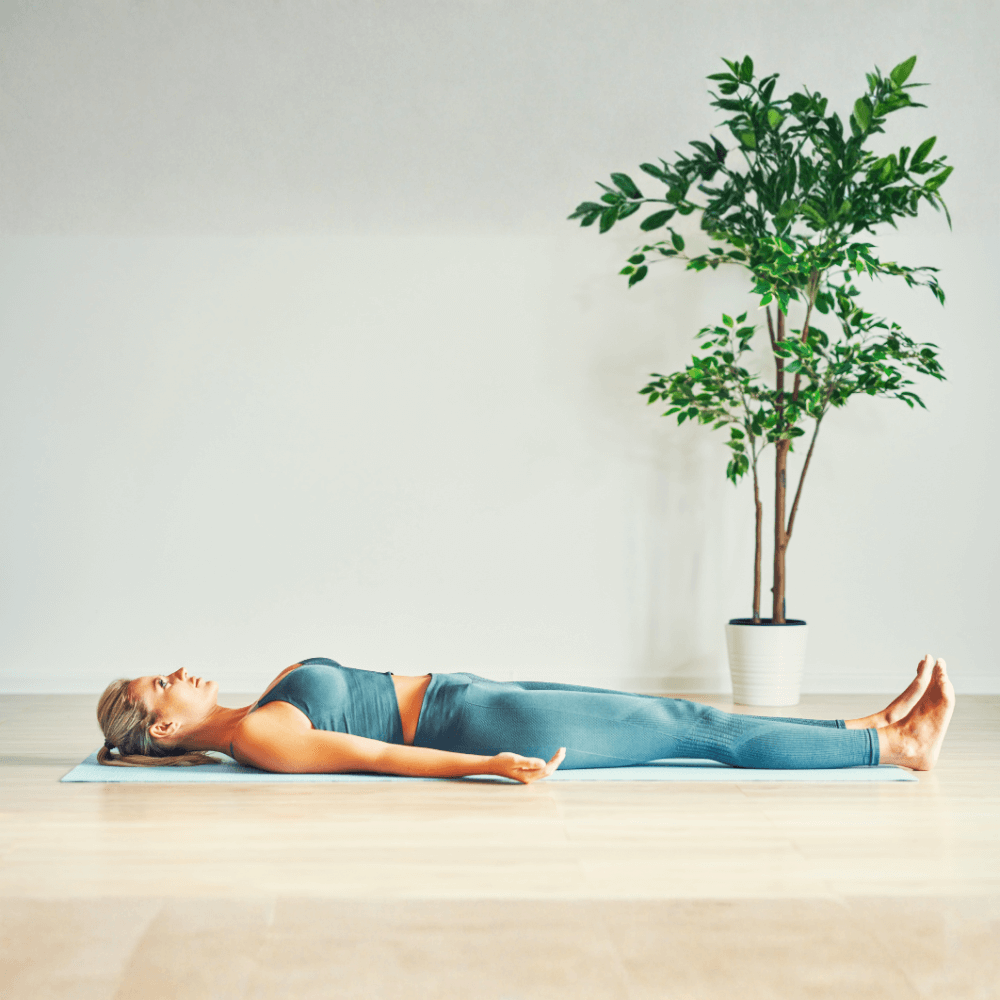
Who it may suit: General knee ache or reduced confidence loading.
How to do it: Sit or lie with leg straight, tighten thigh to gently press knee towards the surface, hold 5 seconds, relax. Repeat.
Stop if: Pain increases sharply.
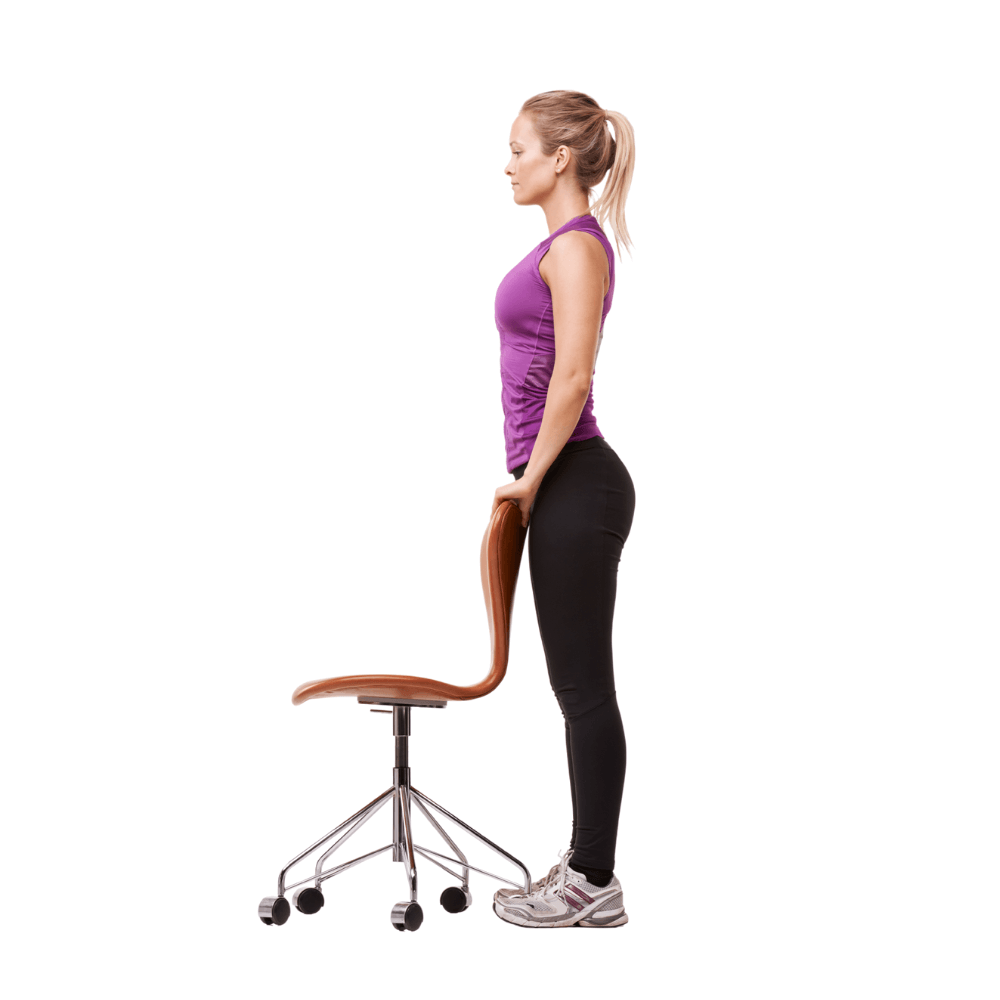
Who it may suit: Pain on stairs or getting up from sitting.
How to do it: Stand up slowly from a chair, keep knee tracking comfortably, sit back down with control. Repeat within comfort.
Stop if: Symptoms worsen during or after.
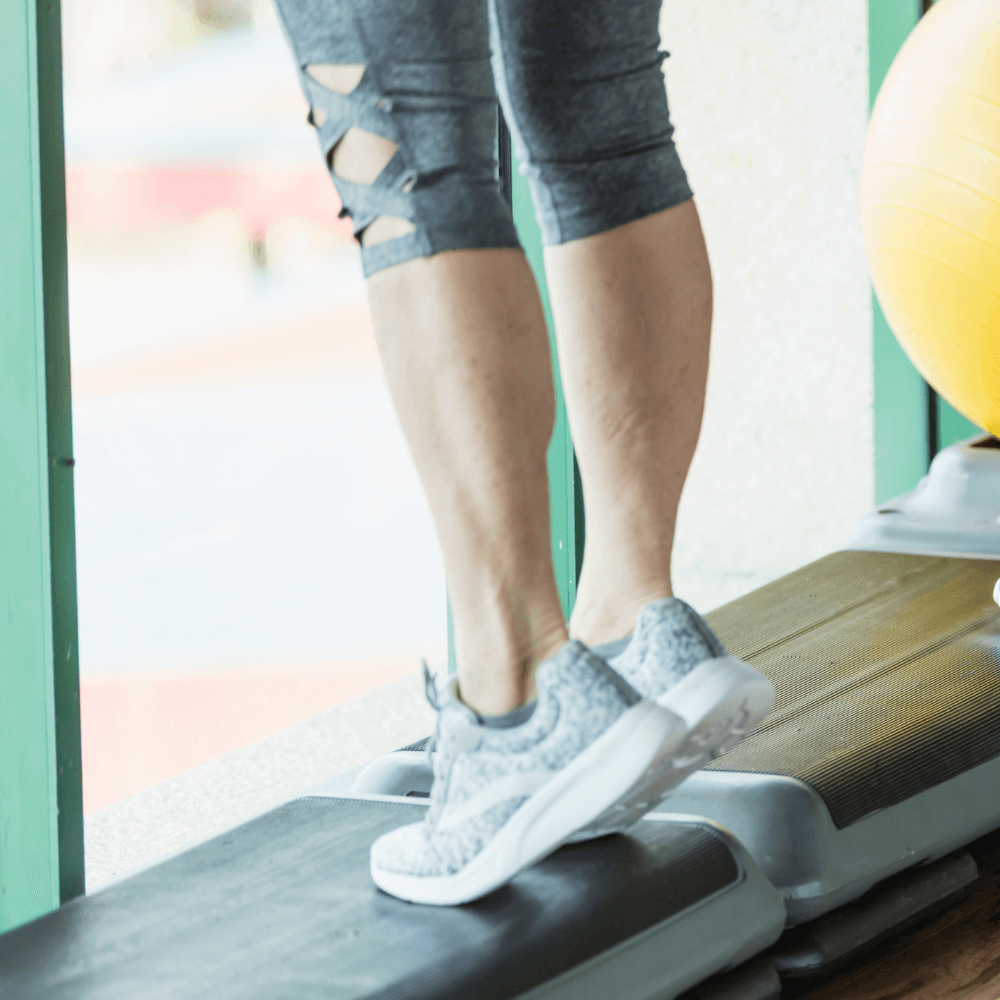
Who it may suit: Walking tolerance and lower-limb support
How to do it: Hold a support, rise onto toes slowly, lower with control. Repeat.
Stop if: Pain increases or swelling worsens.
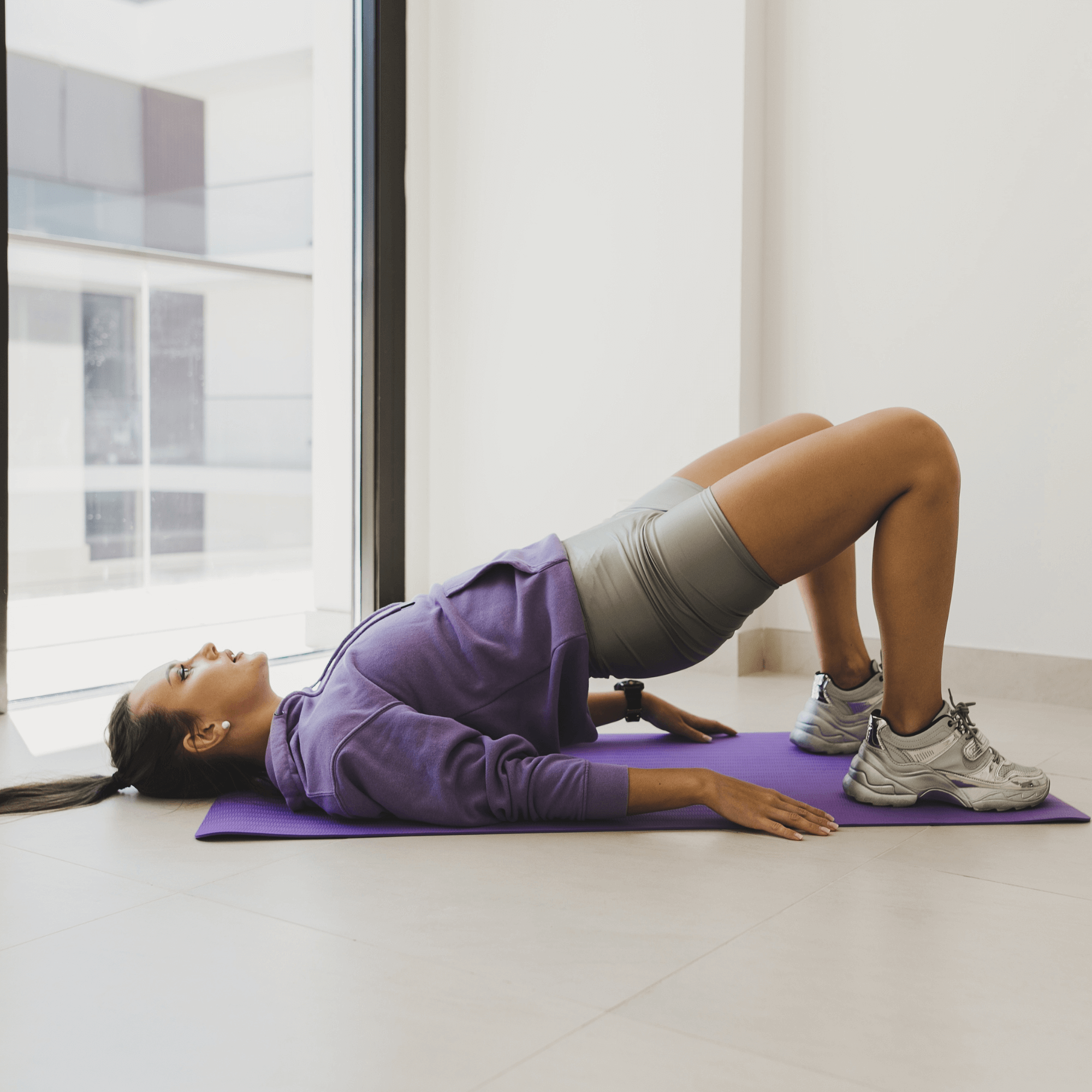
Who it may suit: Knee pain linked to hip control
How to do it: Lie on your back with knees bent, lift hips gently, lower slowly.
Stop if: Pain increases.
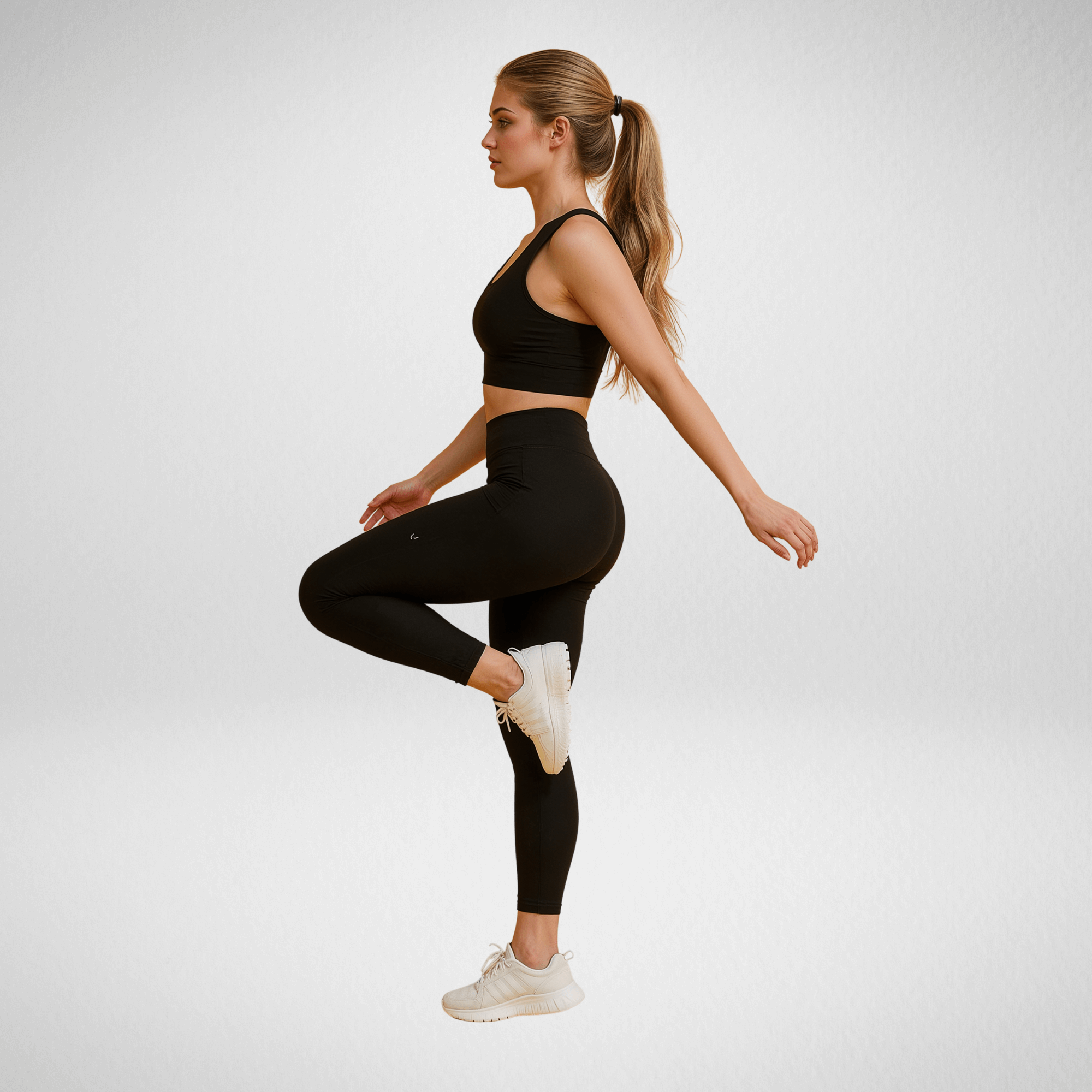
Who it may suit: Stability and control.
How to do it: Stand on one leg, keep pelvis level, hold briefly. Build time gradually.
Stop if: Pain increases or you feel unsafe.

Who it may suit: Knee pain with activity
How to do it: Short, regular walks within comfort limits, gradually increasing distance over time.
Stop if: Symptoms consistently worsen after walking.
Treatment is tailored to the individual, their symptoms, and their goals.
Our approach starts with understanding your pain, your routine, and what you want to return to.
Treatment is tailored and reviewed as you progress.
Your first appointment
Your assessment focuses on your symptoms, movement patterns, and relevant history. This helps guide a personalised plan and sets clear expectations for progress.
Osteopathy for knee pain
Osteopathy may help by addressing joint movement, muscle tension, and how different areas of the body work together, particularly the hip, ankle, and lower back influences on knee loading.
Physiotherapy for knee pain (when rehab is the focus)
Physiotherapy focuses on targeted rehabilitation, strength, and movement retraining, especially when the main goal is returning to activity or sport safely.
How many sessions will I need?
This varies depending on how long symptoms have been present, how reactive the knee is to load, and your goals. Progress is reviewed regularly and plans adjusted as needed.
If knee pain is affecting walking, stairs, sport, or sleep, assessment can help clarify what’s driving it and what to do next. We take a calm, evidence-informed approach focused on understanding your symptoms and supporting recovery.
Knee pain is often linked to changes in activity, load, strength, and movement patterns. It can also be influenced by irritation in the joint or surrounding tissues.
Gentle movement, pacing activities, and avoiding aggravating positions can help. Heat or ice may provide short-term comfort. Persistent pain is worth assessing.
The best approach depends on the person and what’s driving symptoms. A combination of load management, rehabilitation exercise, and targeted treatment is often helpful.
Some people find over-the-counter options helpful, but suitability depends on your health history. It’s best to speak with a pharmacist or GP for advice.
Red flags include inability to weight-bear after injury, severe swelling with heat/redness and fever, or new numbness/weakness. If unsure, seek medical advice.
Pain when bending can relate to how the knee is tolerating load or how the kneecap and surrounding tissues are working. It often improves with the right pacing and strengthening plan.
Behind-knee pain can be influenced by muscles, tendons, swelling, or joint irritation. If there is marked calf swelling, redness, or breathlessness, seek urgent medical help.
Swelling can happen after irritation, overload, or injury. Sudden swelling after a twist or fall, or a hot swollen joint with fever, should be checked.
It depends on what caused it and how the knee is managed. If swelling persists or keeps returning, assessment can help guide next steps.
Some meniscus-related symptoms settle with conservative management, but not all do. Assessment helps determine the best approach and whether referral is needed.
Some people can, especially if symptoms are mild, but others find walking painful or the knee feels unstable or catches. If symptoms persist, get assessed.
It can feel like stiffness, aching with activity, or reduced tolerance to walking or stairs. Symptoms vary and assessment helps clarify what may be contributing.
Often, yes, when they are appropriate for your symptoms and stage. Exercises should be progressive and within comfort, not forced through pain.
Osteopathy may help by improving movement, reducing tension, and supporting how the whole lower limb chain is functioning.
Physiotherapy can be very helpful for strength, control, and return-to-activity rehabilitation, especially where load tolerance is a key factor.