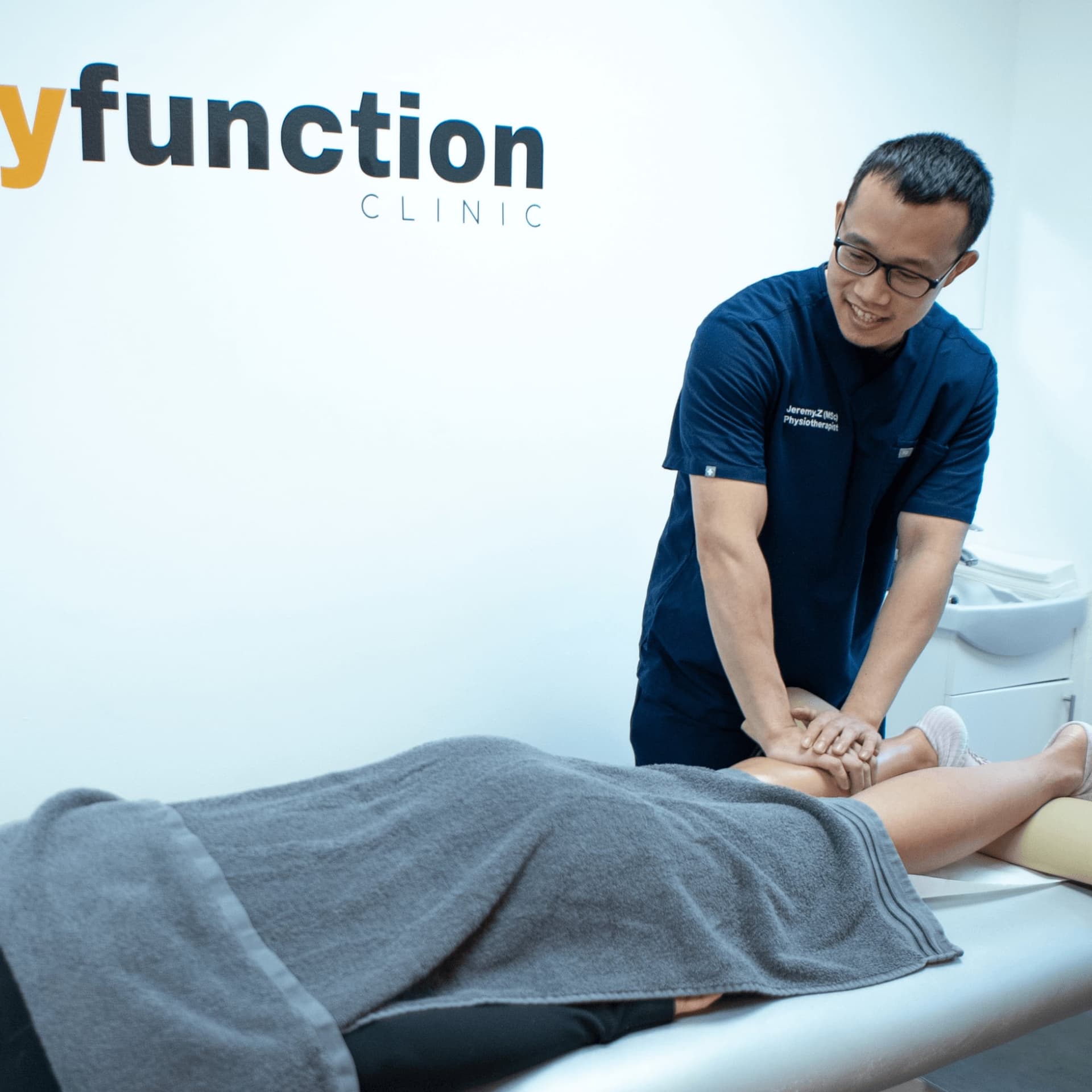
Back pain is extremely common and can affect the lower back, upper back, or both. For many people it improves with the right combination of movement, self-care, and a tailored treatment plan. If your pain is persistent, keeps returning, or is limiting daily life, an assessment can help identify what is driving it and what will help you recover.
Back pain is a broad term that includes discomfort or pain coming from the muscles, joints, and connective tissues of the spine, and sometimes from irritation of nearby nerves. It can appear suddenly after lifting or an awkward movement, or develop gradually from repeated strain, long periods of sitting, stress, or reduced fitness.
Back pain is often described as either acute (short-term) or persistent (longer-lasting). Acute back pain commonly settles within days to a few weeks. Persistent or recurring back pain usually benefits from a clearer plan that addresses the contributing factors, not only the symptoms.
Back pain can feel different from person to person. Common symptoms include:
If symptoms are severe, worsening, or recurring, an assessment can help clarify likely drivers and the safest next steps.
These are common reasons people book in. If your issue is not listed, that is fine.
Book online or call and we will point you to the most suitable clinician.
Lower back pain is the most common type. It is often linked to load and movement, such as lifting, twisting, repetitive tasks, or long periods of sitting. It can also be influenced by reduced hip mobility, deconditioning, stress, and changes in routine.
Many people notice lower back pain is worse after sitting or driving, first thing in the morning, or after returning to sport or the gym. A plan that combines movement, strength, and targeted treatment is often the most effective.
Upper back pain is often linked to posture and sustained positions, such as desk work, laptop use, and phone use. It can also be influenced by the shoulder girdle, rib mechanics, breathing patterns, and tension through the upper body.
Upper back pain may feel like tightness between the shoulder blades, a “gripping” sensation, or discomfort with deep breathing or certain movements. Treatment and exercises typically focus on restoring mobility and reducing overload.
Back pain rarely has a single cause. It is more often a combination of triggers and contributing factors.
- Lifting, twisting, or carrying (especially when tired or rushed)
- Sudden increase in activity (gym, DIY, sport, moving house)
- Repetitive tasks and prolonged standing
- Reduced recovery after stress or poor sleep
- Long periods of sitting or driving
- Desk setup that encourages slumping or one-sided loading
- Poor sleep positions or an unsupportive mattress (for some people)
- Limited movement breaks during the day
- Reduced strength or endurance through the trunk, hips, and legs
- Stiffness through hips and mid-back
- Returning to sport after time off
- Previous episodes of back pain
- Muscle guarding when stressed or anxious
- Shallow breathing and upper body tension
- Reduced activity due to fear of making things worse
Pregnancy and postnatal changes can also influence how the back and pelvis cope with load and movement.
If this is relevant for you, it is worth mentioning during an assessment so the plan fits your current needs.
Most back pain is not serious, but it is important to recognise red flags.
If you are ever uncertain, it is sensible to speak to a healthcare professional for advice.
Most back pain is not serious, but it is important to recognise red flags.
If you are ever uncertain, it is sensible to speak to a healthcare professional for advice.
Transparent pricing, with appointment lengths that respect your time.
Short, regular walks and light mobility often help more than prolonged rest.
Rest can be helpful in short bursts, but too much stillness can increase stiffness and sensitivity.
Alternate activity with breaks, especially during a flare-up.
Heat can reduce stiffness; cold can ease irritation after strain. Choose what feels best for you.
Stand up and move for 1 to 2 minutes every 30 to 60 minutes if possible..
Adjust screen height, chair support, and driving position to reduce strain.
If you use medication, a pharmacist or GP can advise what is appropriate for you.
If pain is persistent, keeps returning, or you feel you are avoiding movement through fear of making things worse, a tailored plan is usually the fastest route to steady improvement.
These are general options that many people find helpful. Choose gentle movement that feels manageable.
Stop if pain worsens significantly or you develop new numbness, tingling, or weakness.
Who it may suit: Stiff or sore lower backs, especially after sitting.
How to do it: Lie on your back with knees bent. Gently flatten your lower back into the floor, then relax. Repeat 8 to 12 reps.
Stop if: Pain sharpens or you feel increasing leg symptoms.
Who it may suit: General stiffness and tightness.
How to do it: On hands and knees, slowly round your back, then gently arch it. 6 to 10 slow reps.
Stop if: Symptoms worsen or movement feels unstable.
Who it may suit: Tight lower back with a “compressed” feeling.
How to do it: Bring one knee towards your chest, hold 10 to 20 seconds, swap. Repeat 2 to 3 times each side.
Stop if: You get increased radiating pain into the leg.
Who it may suit:Upper back tightness, desk-related discomfort.
How to do it: Lie on your side, rotate top arm open, follow with eyes. 6 to 8 reps each side.
Stop if: You feel sharp pain or dizziness.
Who it may suit: Pain linked to lifting, bending, or repeated strain.
How to do it: Soften knees, push hips back, keep back long, return. 6 to 10 controlled reps.
Stop if: Pain spikes or technique feels unstable.
Who it may suit: Most types of back pain, especially during recovery.
How to do it: 5 to 10 minutes once or twice daily, build gradually.
Stop if: Walking increases symptoms steadily rather than settling after.
Back pain treatment usually works best when it addresses both symptoms and contributing factors.
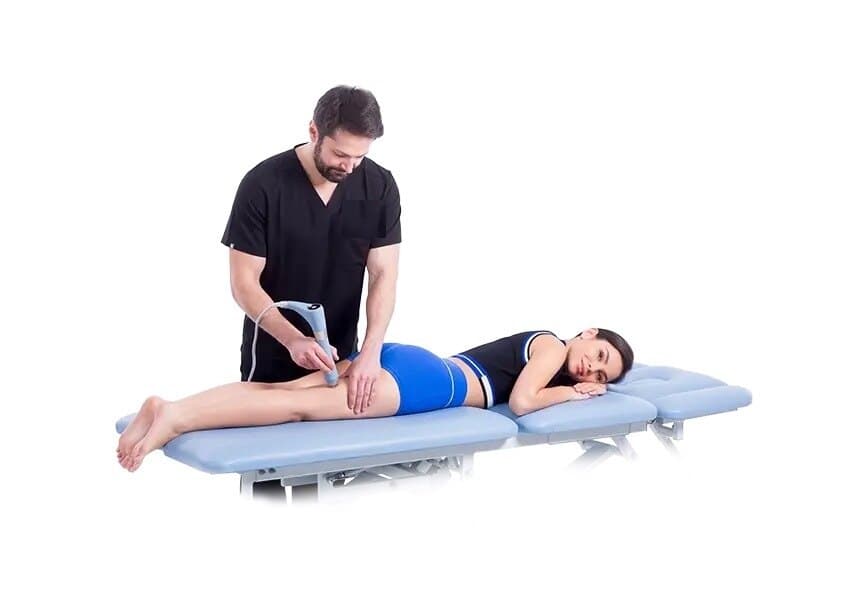
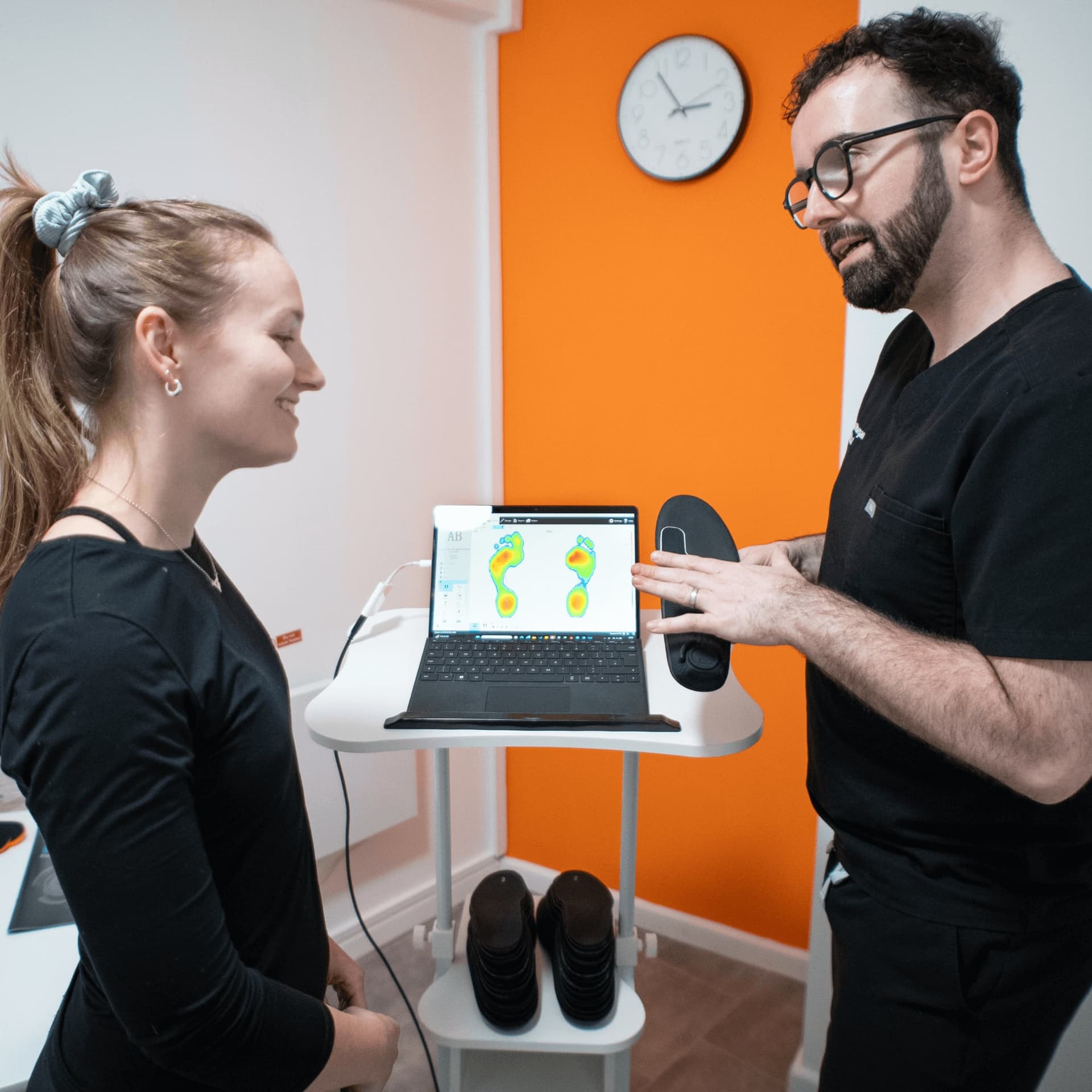
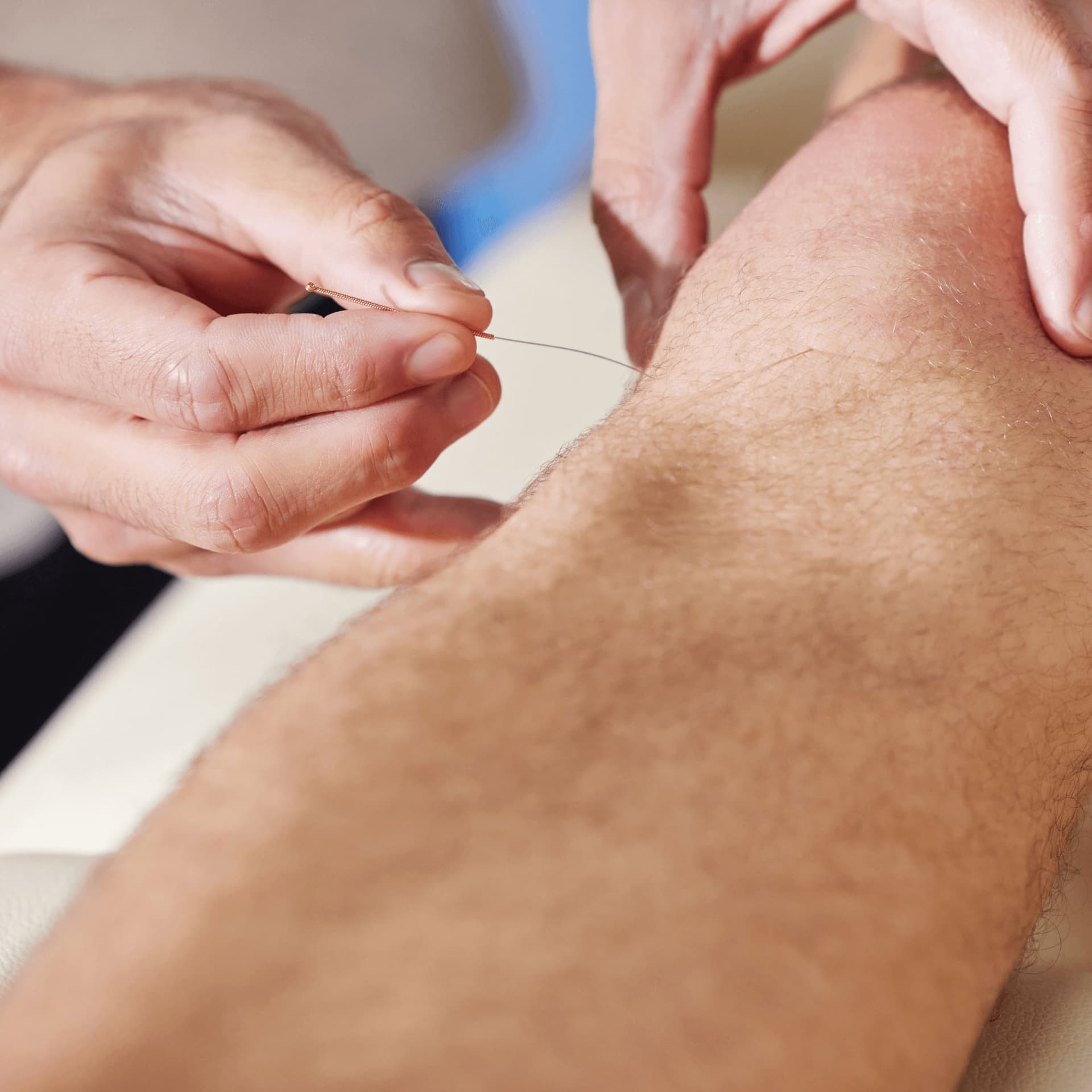
Depending on your presentation and goals, treatment may include:
The right approach depends on how your pain behaves, how long it has been present, and what you need to get back to.
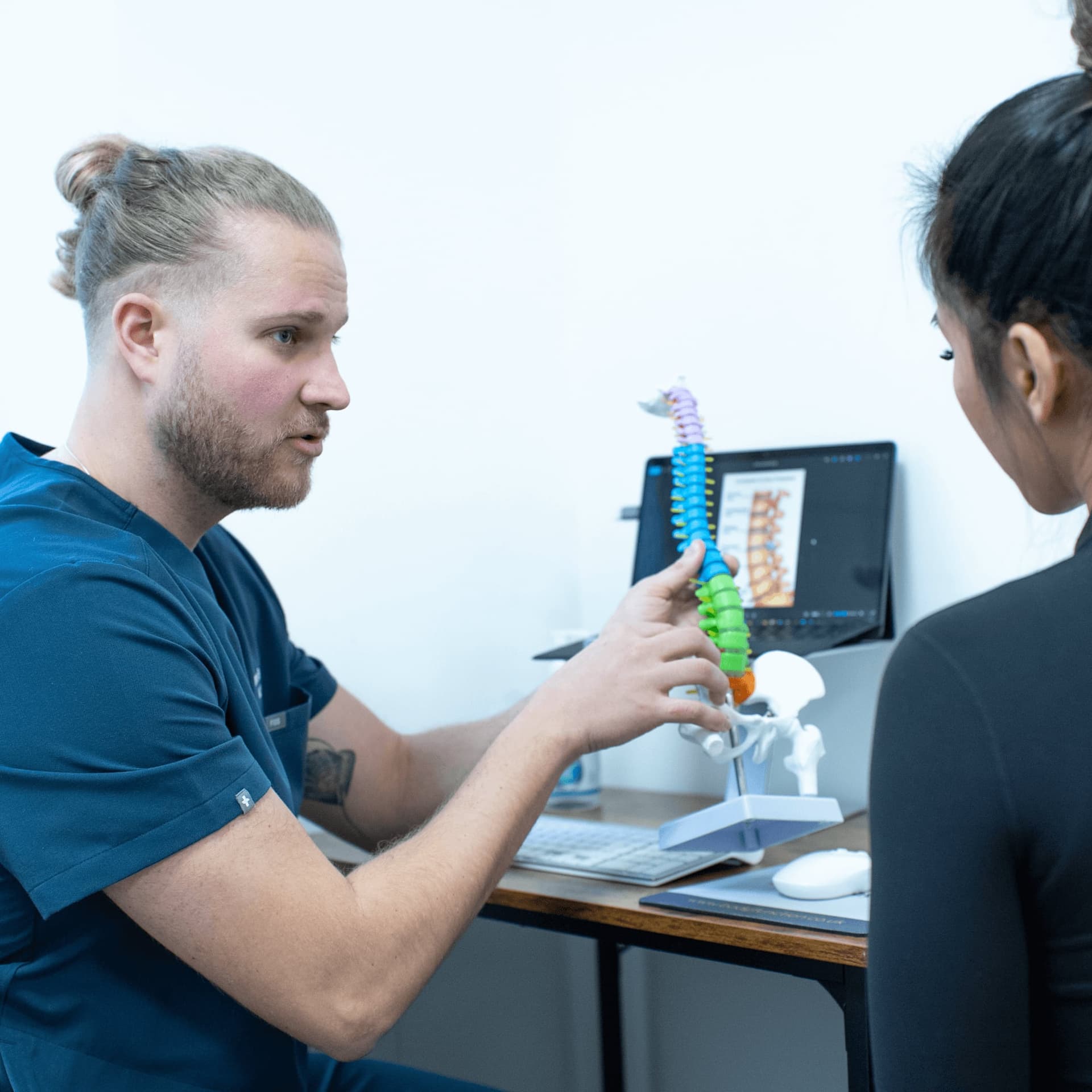
In your first appointment we will take a detailed history, assess how you move, and discuss the patterns that may be contributing to your symptoms. You will leave with a clear plan, including practical next steps you can start immediately.
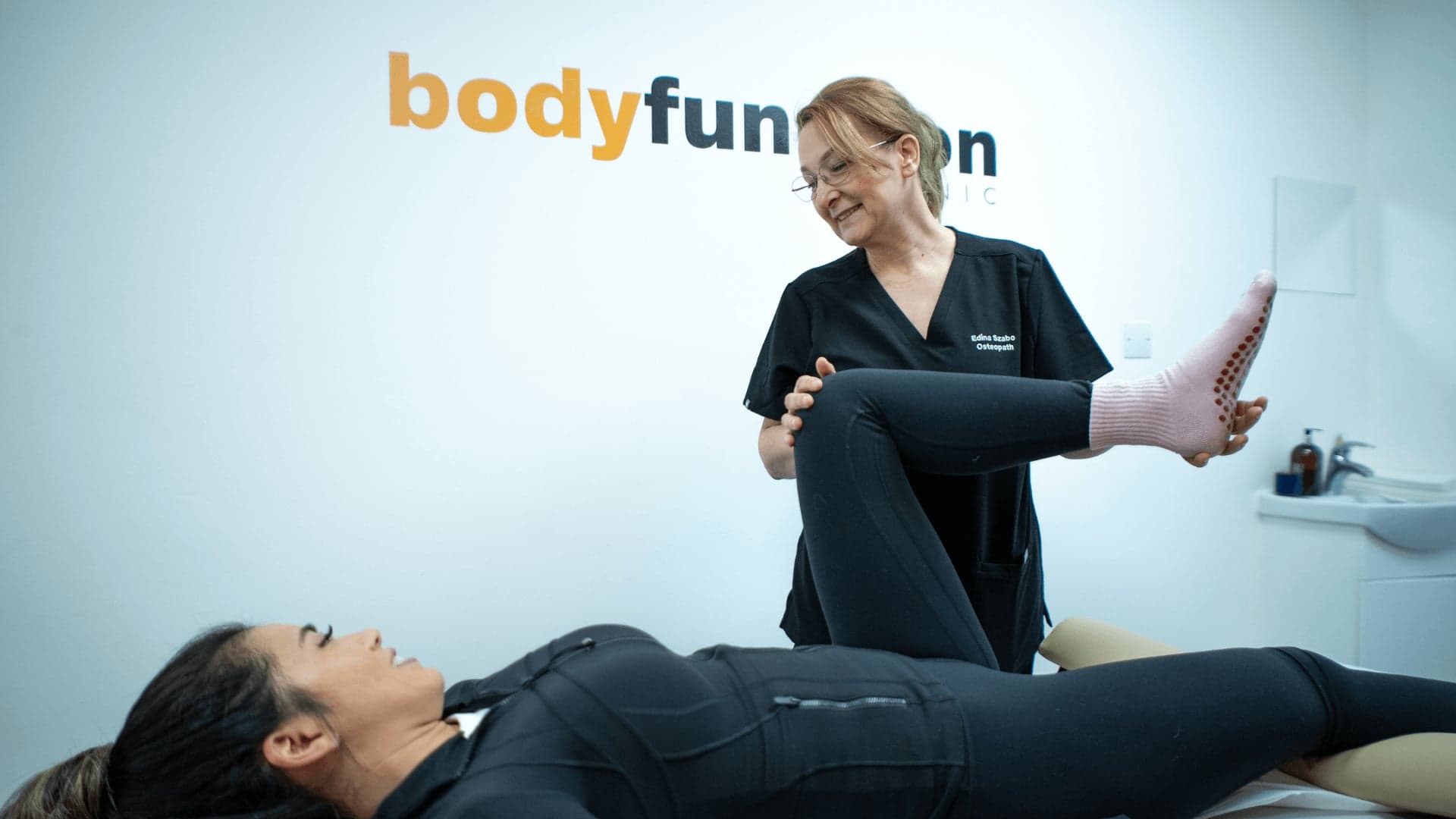
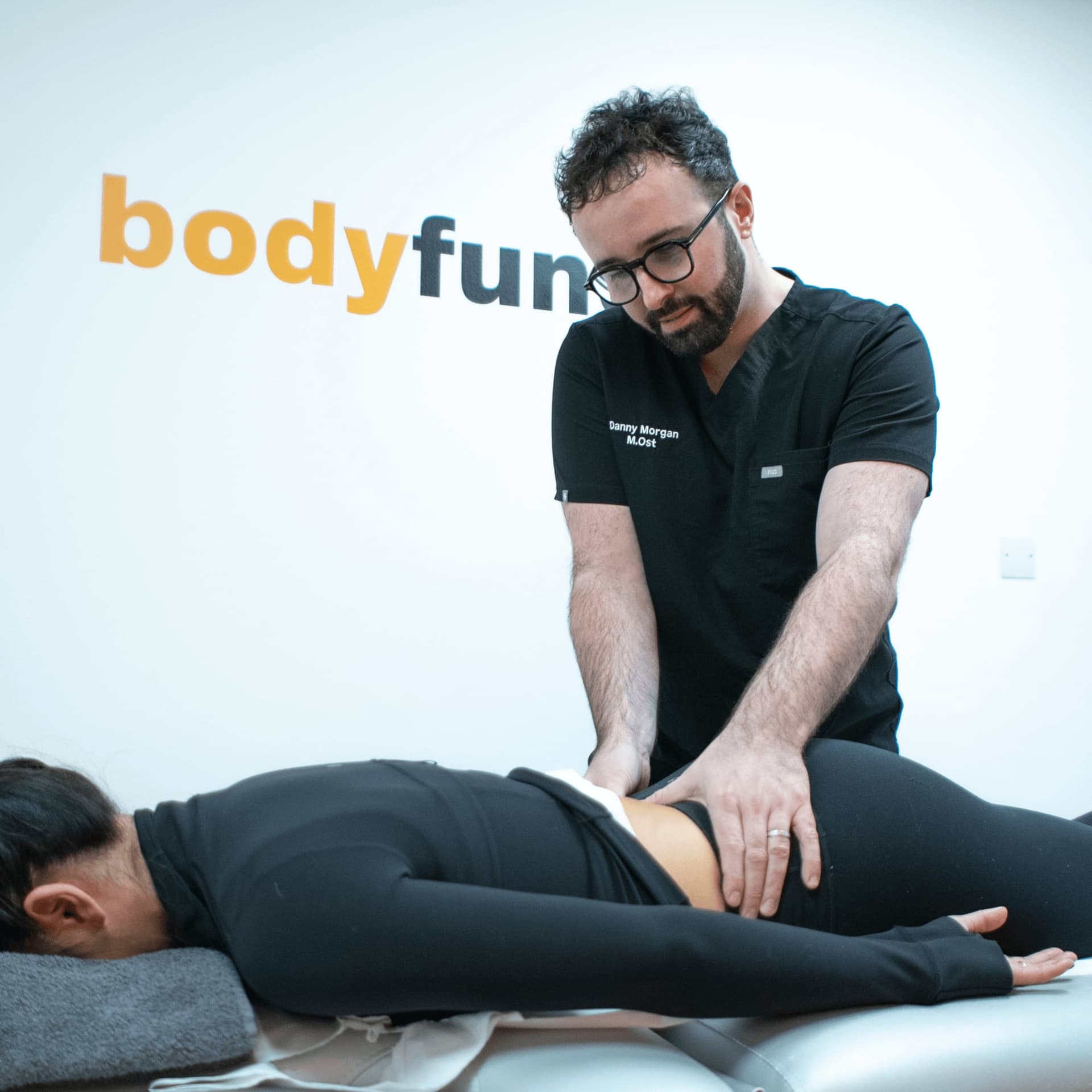
Osteopathy can help when back pain is linked to stiffness, joint restriction, muscle tension, or movement patterns that have become guarded. Treatment may include gentle hands-on techniques to improve mobility, reduce pain, and help your body move more comfortably.
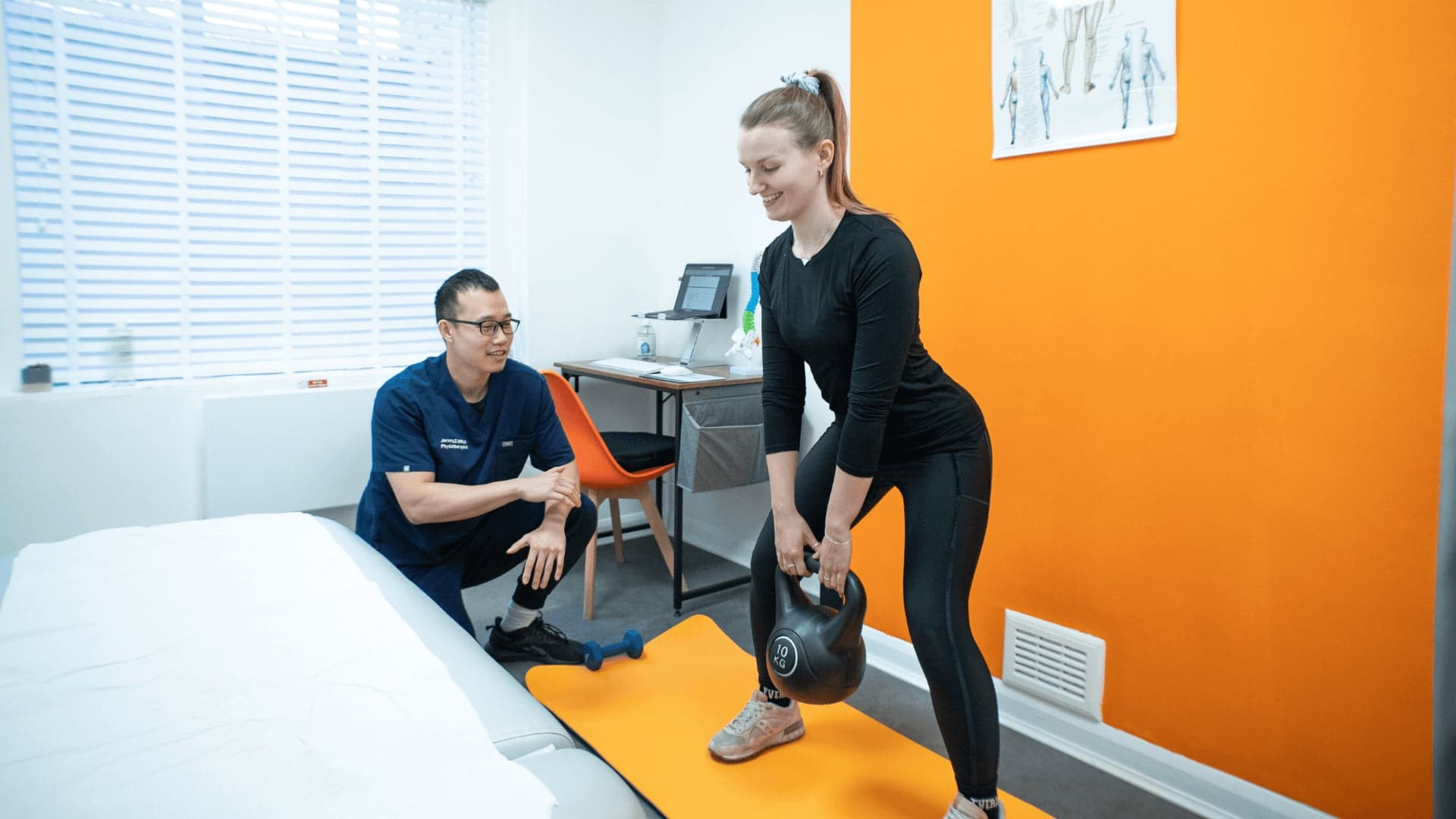
Physiotherapy is often helpful when strengthening, progressive loading, and rehab planning are key. This can include targeted exercise, guidance on returning to activity, and building confidence in movement over time.
This varies depending on how long you have had symptoms, how severe they are, and how your body responds to treatment and rehab. Some people benefit from a small number of sessions with a clear home plan, while others do better with a short course of care and structured progression. We review progress regularly and adjust the plan accordingly.
If back pain is limiting your life, you do not need to “push through” and hope it settles.
A clear assessment and plan can reduce uncertainty and help you return to normal movement with more confidence.
Back pain support is available at both locations. Use the links below to choose the service that fits you best, or go straight to booking.
If back pain is limiting your life, you do not need to “push through” and hope it settles.
A clear assessment and plan can reduce uncertainty and help you return to normal movement with more confidence.
Back pain support is available at both locations. Use the links below to choose the service that fits you best, or go straight to booking.
For many people, the best approach is gentle movement, pacing, and avoiding prolonged sitting or bed rest. Heat can help stiffness and walking is often a good starting point. If pain persists or keeps returning, an assessment can clarify what will help most.
Quick relief often comes from reducing aggravating positions, adding short movement breaks, and using heat if it helps. Simple mobility exercises can also reduce stiffness. If pain is severe or worsening, it is important to seek appropriate advice.
Lower back pain can be linked to strain, stiffness, repeated loading, prolonged sitting, stress-related muscle tension, reduced strength, or changes in routine. In many cases there is not one single cause, which is why tailored assessment is helpful.
Back pain may be more concerning if it follows major trauma, comes with fever, unexplained weight loss, progressive weakness, or changes to bladder or bowel function. If you are unsure, it is sensible to speak to a healthcare professional.
Seek urgent medical help if you have red flag symptoms such as loss of bladder or bowel control, saddle numbness, or progressive weakness. For non-urgent cases, consider speaking to a clinician if pain persists beyond 1 to 2 weeks, affects sleep, or limits daily activity.
Most people do best with gentle movement and pacing rather than prolonged rest. Rest can be useful in short bursts, but too much stillness often increases stiffness and reduces confidence in movement.
There is no single best position for everyone. Many people find side sleeping with a pillow between the knees helpful, or back sleeping with a pillow under the knees. The goal is comfort and reduced strain.
Exercises often help when they are appropriate for your symptoms and progressed gradually. Gentle mobility can reduce stiffness, and strengthening can reduce recurrence. If exercise consistently worsens symptoms, it is worth getting guidance.
Stress can contribute to muscle tension, reduced movement, shallow breathing, and increased sensitivity, which may influence back pain. Addressing stress alongside movement and rehab can be helpful for some people.
Acute back pain often improves within days to a few weeks. Persistent or recurring pain can still improve well with the right plan, but it may take longer and usually benefits from structured rehab and behaviour changes.
Osteopathy can be helpful for many people, particularly when pain is linked to stiffness, tension, or guarded movement. It is often most effective when combined with advice and exercises tailored to your needs.
Physiotherapy is commonly used for back pain, especially when strengthening, progressive loading, and return-to-activity planning are needed. A clinician can help you choose the most appropriate route based on your presentation.